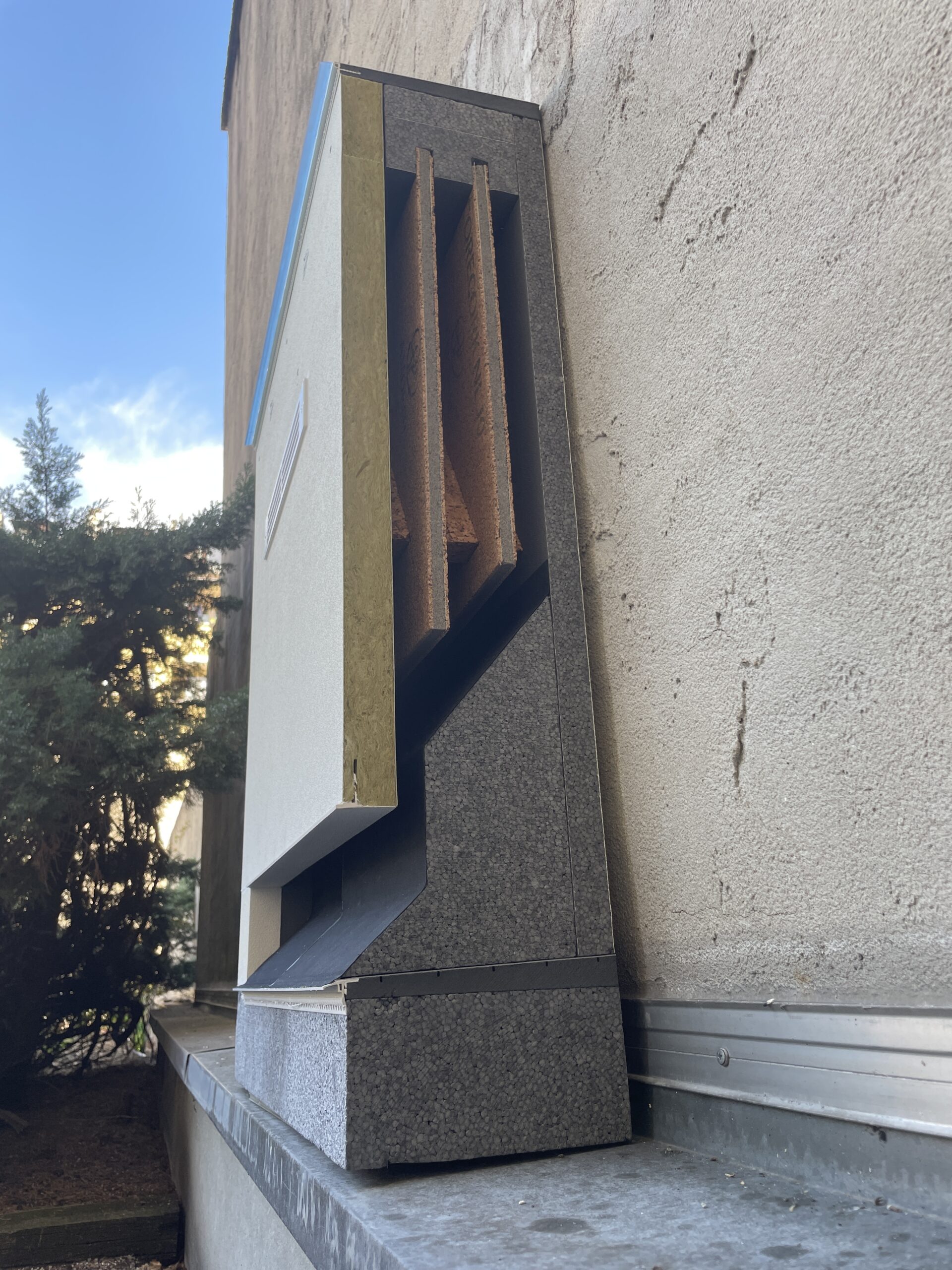
Bats will soon be able to move in! The first prototypes of the bat box that can be integrated into ETICS are nearing completion and will soon be mounted on building façades for the initial testing phase.
The loss of roosting sites due to energy-efficient renovations affects many bat species that rely on crevices and cavities in buildings for shelter. The FLAUSBAU project brings together effective species conservation and modern architectural concepts: The bat box modules developed “disappear” into the building’s façade while simultaneously meeting the requirements for energy-efficient facade insulation.
Modern Insulation Technology for Homes and Bats
Material selection is a key aspect of the boxes’ development: The façade must be optimally insulated while also creating a roost that protects bats from heat, wind, and the elements. To this end, four prototypes were developed to test various factors. The body is made of various materials, including rock wool, which is designed to provide the animals with optimal protection from the heat.
The interior was specifically tailored to the needs of different bat species, such as pipistrelles and broad-winged bats:
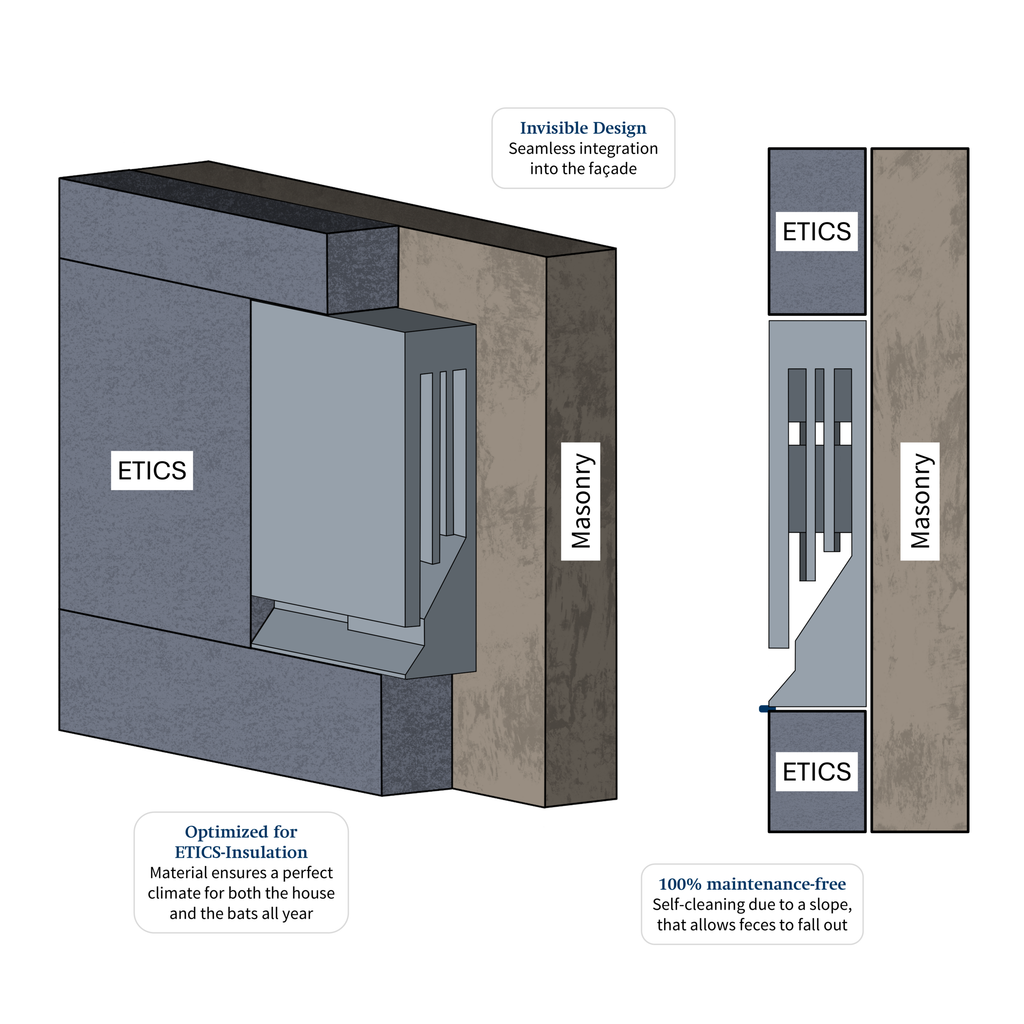
● Multi-chamber architecture: The modular design features columns that taper toward the sides. Each column is intended to accommodate animals of different sizes, allowing the animals to move to a different chamber based on their climatic preferences. This also enables the animals to choose between cooler and warmer sections within the bat box depending on the outside temperature and sunlight.
● Grip-Optimized Surfaces: The interior walls are coated with cork to ensure the animals have a secure grip when crawling and hanging.
● Discreet Entry Openings: Only the entry area is visible on the exterior. Inside, the size of the entry slits varies to accommodate the preferences of different bat species, while maintaining a uniform appearance from the outside. The entry edge is coated with a weather-resistant finish. The slope toward a drip edge makes the box maintenance-free.
Start of the First Test Phase
Following an intensive exchange on materials and design with specialists and experts from the project’s working group, practical testing is now set to begin. The four different prototype boxes will be installed in the coming weeks on buildings with bat populations in Rhineland-Palatinate, Brandenburg, and Saxony. When selecting installation sites, care was taken to ensure that as many building-dwelling species as possible would be encountered across all test locations. The Leibniz Institute for Zoo and Wildlife Research (IZW) will soon begin its monitoring program. This will be aided by a specially developed technology being tested in the prototype boxes. A light sensor measures the number of bats entering the box, while echolocation recordings provide information on bat species. Sensors measure temperature and humidity trends to study the microclimate inside the box. The results from this technology are verified and supplemented by exit counts and echolocation recordings.
After evaluating the first test phase, the design will be optimized into a final box design, which will be certified. These final boxes will then be installed at 50 renovation sites nationwide and will continue to be scientifically monitored. Upon completion of the project in 2031, the construction plans and results will be made available to the general public. The boxes could become standard equipment in ecological building renovations and new construction projects.