
Buildings are being renovated to save energy and protect the climate. This is important. However, for bats, this can be precisely where the problem lies. Many species use crevices and cavities in buildings as roosts. When these are sealed or removed during renovations, the animals lose their refuges – often permanently.
This is where FLAUSBAU comes in: species conservation measures for bats within the framework of energy-efficient building renovations.
Why bats require special protection
In Germany, all bat species are strictly protected. They depend on roosts, which they use, for example, as resting places, for raising young, or for overwintering. For many species, buildings serve as substitutes for natural cave structures. If these roosts are lost through construction or refurbishment measures, it can have significant effects on local bat populations. Consequently, the law mandates that appropriate compensatory measures must be implemented in the event of a permanent loss. These measures are intended to ensure that the so-called continuous ecological functionality (CEF) of the original roost is maintained. In practice, however, bat roosts are often not systematically recorded during energy-efficient renovations. Furthermore, the success of substitute roosts is rarely monitored.
From research to application: the path of FLAUSBAU
The FLAUSBAU project was preceded by a research and development (R+D) project. This clearly demonstrated that bat protection in the context of energy-efficient building refurbishments has been insufficiently studied and that reliable scientific foundations are lacking. Building on this, the FLAUSBAU pilot phase was carried out as part of a testing and development (T+D) project. Both the R+D and T+D projects were funded by the Federal Agency for Nature Conservation using funds from the Federal Ministry for the Environment, Climate Action, Nature Conservation, and Nuclear Safety.
What was investigated during the pilot phase
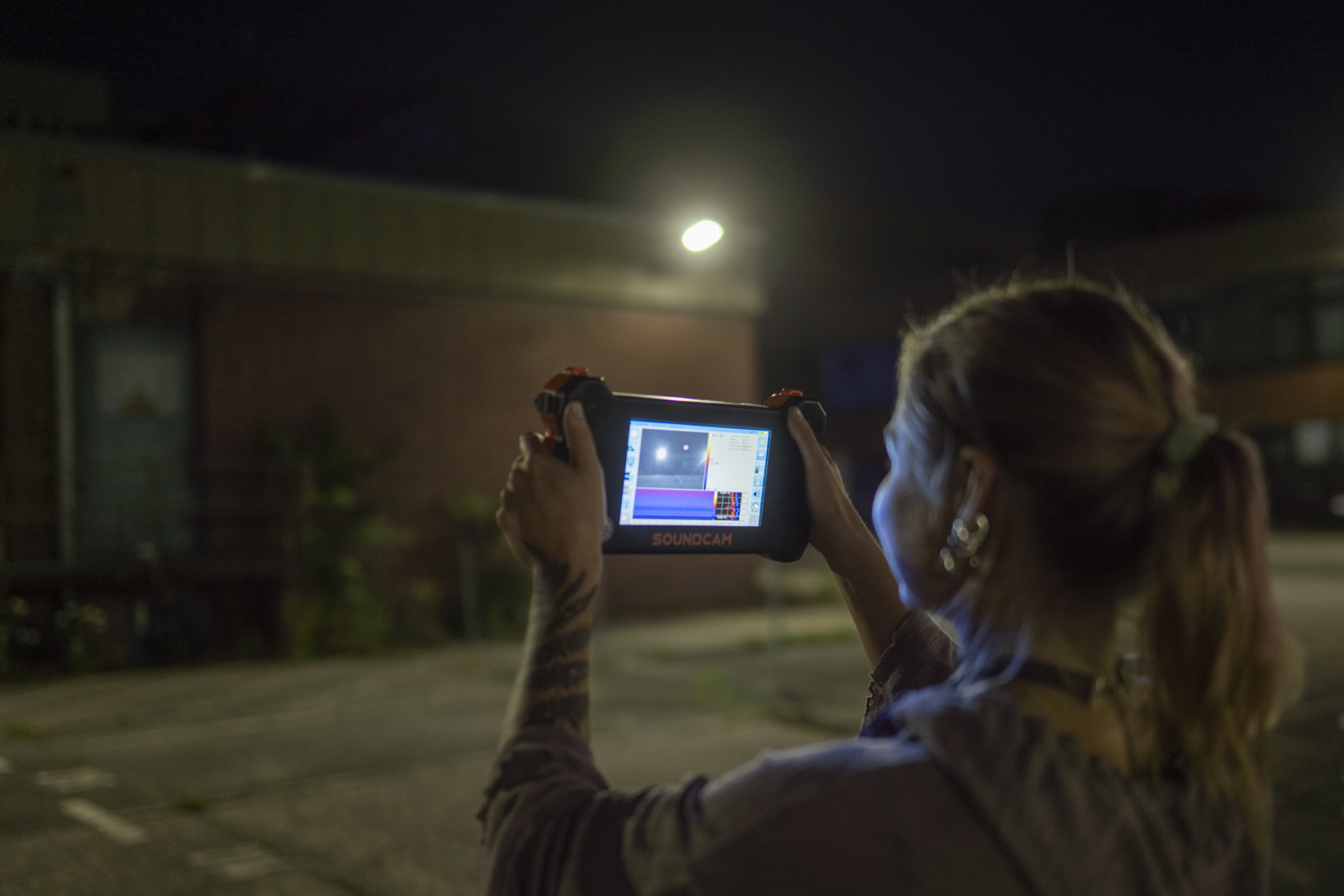
During the pilot phase, national and international examples of how to deal with building-dwelling bats during energy-efficient renovations were researched. In addition, structured surveys were conducted among environmental authorities, planning offices, environmental associations, and scientific institutions. A total of over 400 people were contacted, and more than 250 experts from Germany and abroad participated in the survey. The results clearly show: bat protection has thus far been insufficiently considered during energy-efficient renovations. At the same time, there is a high willingness to implement scientifically sound and practical solutions. Another focus was on evaluating methods for monitoring the success of substitute roosts. Various recording and monitoring procedures were tested and compared. It became apparent that no single method meets all requirements; rather, a combination of several procedures is necessary for reliable monitoring.
Foundation for the main project
The pilot phase provides the technical and conceptual basis for the main project. The central focus is the development and testing of modular bat roosts that are integrated directly into external thermal insulation composite systems (ETICS). These system solutions are intended to meet both structural engineering and species conservation requirements and be scientifically supported through standardized monitoring. The goal is to develop practical, legally secure, and effective solutions that combine climate protection measures in the building sector with the long-term preservation of bat populations.